
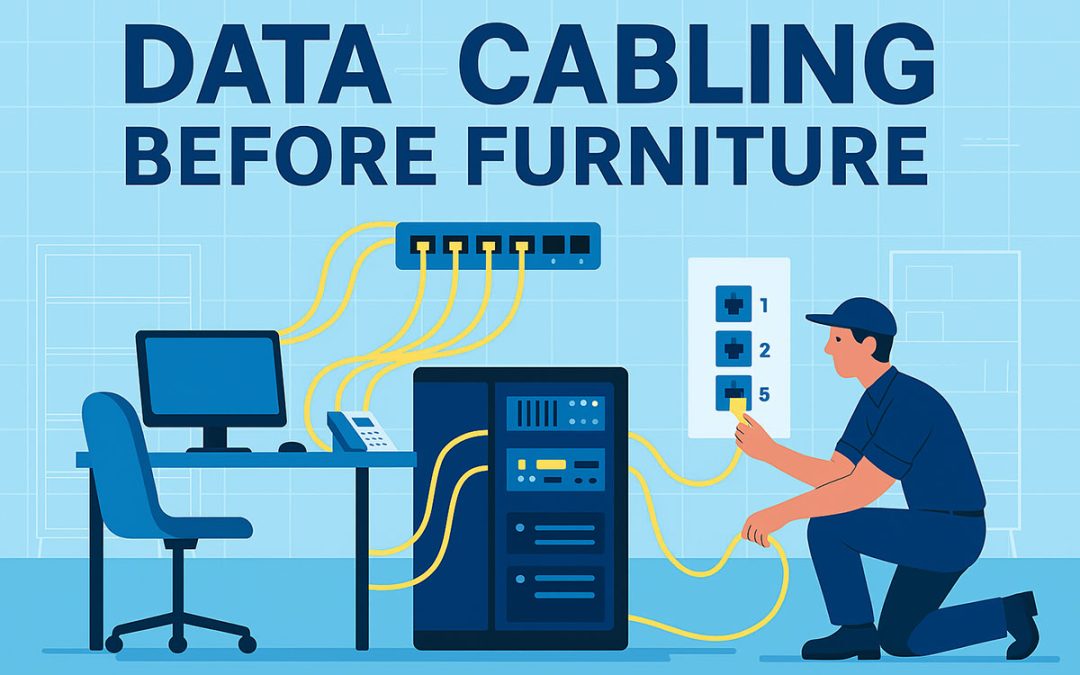
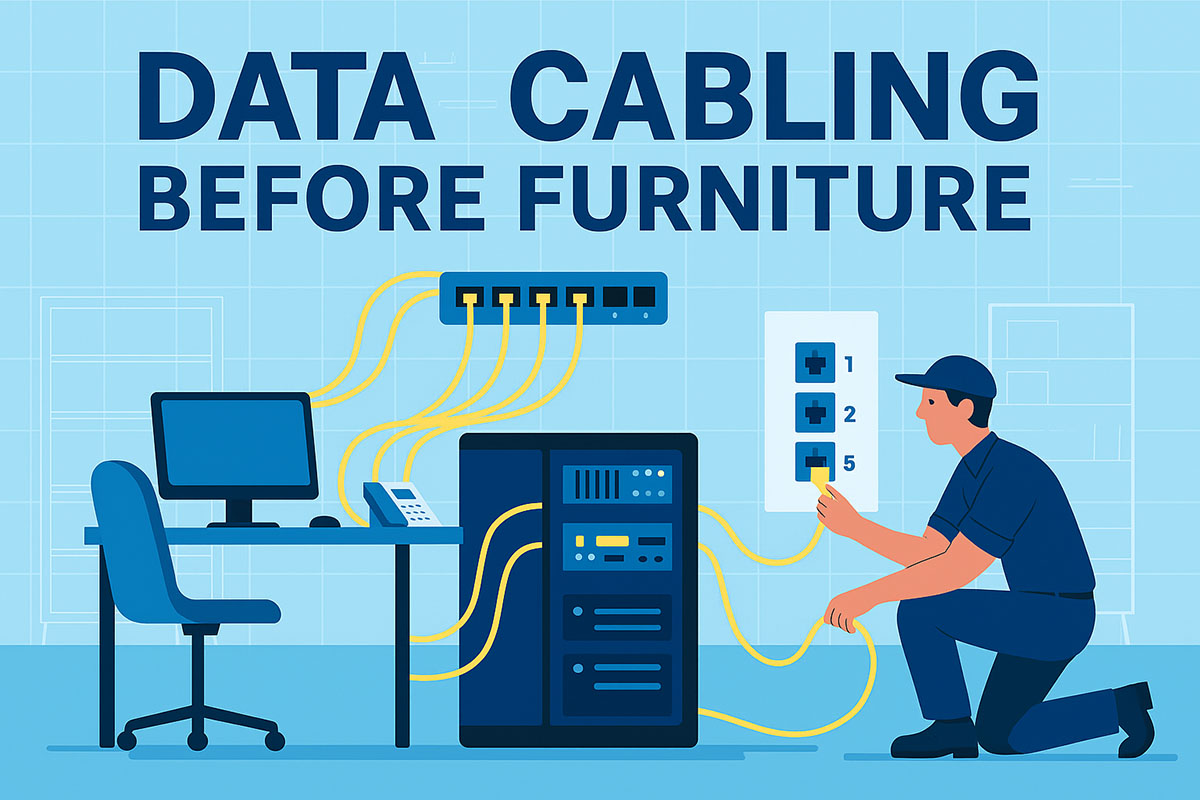
When a business moves into a new office, the focus is often on the exciting stuff — picking furniture, setting up meeting rooms, and getting everything looking sharp for move-in day. But before the desks arrive and the walls are painted, there’s one thing that deserves attention first: data cabling.
Planning your network cabling early can save money, reduce downtime, and make sure your office runs smoothly from the moment you switch everything on.
Why Cabling Comes First
Every phone call, Zoom meeting, and online transaction depends on a reliable connection. Without properly designed cabling, your new office can quickly run into problems like slow internet, patchy Wi-Fi, or overloaded switches.
Running cables after furniture is installed or walls are finished is messy and expensive. It means moving desks, drilling through new plaster, or running visible cables along walls and ceilings. Doing it right the first time makes your workspace cleaner and your network more efficient.
Planning Your Network Layout
A good cabling plan starts with your office layout. Before you finalise where desks and meeting rooms go, map out where network points, power outlets, and patch panels should sit.
Think about:
- Desk clusters and shared spaces – each workstation needs at least one dedicated data point.
- Printers, phones, and access points – don’t forget shared devices that rely on network access.
- Server racks and switches – these should be in a central, well-ventilated area.
- Future expansion – adding spare ports now avoids costly rework later.
Working with a qualified cabling technician at this stage means your design will fit both your workflow and your technology needs.
Common Mistakes to Avoid
- Leaving cabling until after the fitout
Once furniture, partitions, and flooring are in, running cable becomes much harder and more expensive. - Using cheap or mixed cabling
A professional will ensure all cables are the same standard and properly tested. Mixed grades or untested cable can cause slow performance and faults that are difficult to trace. - Ignoring Wi-Fi planning
Even wireless networks rely on wired access points. Cabling should be planned to ensure full coverage across the office without dead zones. - Skipping labelling
Each port and cable should be labelled clearly. This makes maintenance simple and prevents downtime when equipment moves or changes.
The Benefits of Doing It Right
- Faster, more reliable connections across all workstations
- Easier troubleshooting when something goes wrong
- Cleaner look with cables hidden behind walls or under floors
- Future-proofing for new technology or extra staff
Investing in proper cabling now helps your business avoid expensive fixes later and keeps your team productive from day one.
How Telecom Today Can Help
Our licensed technicians specialise in commercial data cabling across Sydney, from small offices to full building fitouts. We handle everything from initial design and layout advice through to installation, testing, and labelling.
We work with builders, IT managers, and business owners to make sure every cable is correctly installed and fully compliant with ACMA standards.
Whether you’re relocating, expanding, or starting from scratch, Telecom Today can help plan your network so it performs perfectly once the furniture arrives.
The Takeaway
Before you unpack a single desk, make sure your cabling is sorted. It’s one of the simplest ways to make your office move-in smooth, productive, and future-ready.
If you’re planning a new fitout or renovation, contact Telecom Today for expert advice on structured cabling design and installation across Sydney.